Rent vs Buy an Exotic Car: The Honest Math for South Florida

You know the moment. You've spent forty minutes on the configurator, choosing the paint, the wheels, the carbon package, the stitching on the seats. The car on your screen looks exactly right. Then you scroll to the total, and the number stops being a fantasy and starts being a decision. Do you buy this thing, or do you keep renting it when the mood strikes?
Here is the honest thesis, stated before we get into the details: ownership fits a narrow profile, and renting wins for variety and occasional use. The right answer to the rent vs buy exotic car question depends almost entirely on one thing that has nothing to do with the sticker price, which is how many days a year you will actually drive it.
We run an exotic fleet in South Florida. We've been at this since 2020, with more than 750 clients through our doors, so we could easily tell you to rent forever and call it a day. We won't. We benefit either way, which means we can afford to be straight with you. Some of you should buy. Most of you probably shouldn't. Let's do the actual math, the honest kind, the kind that includes the costs nobody prints on the window sticker.
The Real Question Isn't Price, It's Usage
Almost every conversation about buying an exotic starts in the wrong place. People anchor on the monthly loan or lease payment, decide whether that number feels survivable, and move forward or not. That's a trap. The payment is the smallest honest part of the story, and it tells you nothing about whether owning makes sense for your life.
The better starting point is a gut check: how many days a year will this car actually leave the garage? Not in your imagination, where you're carving Ocean Drive every Friday night. In reality, where you have work, family, weather, and the small friction of getting a low, wide, expensive car out of a tight parking structure.
Here's what we see over and over. Enthusiasts dramatically overestimate their usage. The first month is euphoric. You drive it everywhere, even to the grocery store, even when it's a hassle. By month four, it's a special-occasion car. By month eight, the odometer is barely moving, because I-95 traffic is not where anyone dreams of sitting in a Ferrari, and valet lines at South Beach hotspots are their own form of stress when you're personally liable for every curb rash.
That's not a knock on ownership. It's just the pattern. And once you frame the decision around real days per year rather than the monthly payment, the whole calculation changes shape.
Depreciation, the Cost No One Puts on the Window Sticker
If you take one idea from this article, take this one: depreciation is the single largest cost of owning most exotics. It dwarfs insurance, maintenance, and fuel combined. And because it doesn't arrive as a monthly bill, it's the cost people conveniently forget until they try to sell.
We'll speak in ranges here rather than fixed figures, because values move and any specific number would be stale by the time you read it. But the pattern is consistent. Many mainstream exotics shed a meaningful chunk of their value in the first two to three years, often a substantial double-digit percentage. A car that felt like a triumph on delivery day can be worth notably less by the time you're ready to move on, and that gap is real money that simply evaporates whether you drove it ten days or two hundred.
The balance point, because fairness matters: not every exotic behaves this way. A small set of rare, limited-production models hold their value beautifully, and a handful appreciate. Special-series cars, low-volume homologation specials, and certain collector-grade machines can be the exception that proves the rule. If you're buying one of those, exotic car depreciation isn't your enemy, it's arguably an asset class. But those cars are the minority, they're hard to acquire at sticker, and they usually require you to already be a known quantity to the manufacturer. For the average enthusiast eyeing a beautiful, current-production supercar, depreciation is the quiet cost that makes ownership expensive long before the service bills arrive.
Why Depreciation Hits Harder in a Fast-Moving Market
The exotic segment moves quickly. Manufacturers refresh models, introduce new variants, and roll out successor generations on a cadence that keeps the lineup exciting and, as a side effect, keeps used values under pressure. When a new version lands with more power, sharper styling, and updated tech, the previous car doesn't stop being wonderful. It just stops being the newest thing, and the market prices that in.
Demand shifts too. A color or configuration that's hot this year can cool the next. Trends in the enthusiast community, changes in what's celebrated on social feeds, even broader economic mood all feed into resale. This is simply the reality of owning a depreciating high-value asset in a market that prizes newness. When you rent, that pressure is entirely someone else's problem.
The Total Cost of Ownership Stack
The loan or lease payment is the entry line, not the total. To understand real Lamborghini ownership cost, or the cost of owning any exotic, you have to stack the recurring items on top, and enthusiasts routinely underestimate every one of them.
We'll keep this in general terms. But understand that each layer below is a genuine, ongoing line item, and together they can rival or exceed the payment itself.
Insurance in a High-Value Metro
Insuring an exotic in the Miami area is not cheap, and there are structural reasons for that. Premiums track the value of the car, and these are high-value machines. They track repair costs, which for exotics are steep because parts and specialist labor are expensive. And they track the local risk climate, which in a dense coastal metro with a busy theft environment is not favorable.
The result is that annual premiums on an exotic here can run well into serious territory, meaningfully higher than what the same car might cost to insure in a quiet inland market. It's a recurring cost that doesn't go away, and it's one of the first things people forget when they're staring at the configurator.
Maintenance, Service Intervals, and Specialist Labor
Exotics are engineered to perform, and performance components wear. Scheduled service intervals arrive whether you drive the car hard or barely at all, because much of the maintenance is time-based as well as mileage-based. Fluids, filters, and inspections are simply part of the deal.
Tires deserve their own mention. High-performance rubber on a powerful car wears fast, especially if you actually use the performance you paid for, and replacement sets are a real expense. Then there's the labor. Specialist technicians who work on these cars command specialist rates, and the service networks are limited. In South Florida you have options, but you may not have one around the corner, which means exotic car maintenance is a calendar and logistics burden as much as a financial one. You schedule around availability, you sometimes wait for parts, and you plan your driving around service windows. That's part of ownership too, and it doesn't show up on any payment estimate.
Storage, Registration, and the Small Stuff
Then come the quiet line items. Covered, climate-controlled parking in Aventura or on Miami Beach is not free, and if you want to protect the car properly, it's close to mandatory here. Registration and fees recur. Detailing, which you'll want to do often to keep a special car looking special, adds up over a year. Trickle chargers, car covers, ceramic coatings, the occasional wheel refinish after an unlucky pothole on Collins. None of these is large on its own. Together, over a year, they're a real number, and they're the part of ownership nobody photographs for their feed.
South Florida Changes the Math
Everything above applies anywhere. But owning an exotic specifically in Miami and the broader South Florida region comes with a local layer that inland owners never think about. This is where the calculus shifts in ways spreadsheets rarely capture.
Salt Air, Humidity, and Sun
The coast is beautiful and the coast is corrosive. Salt air is relentless on paint, brightwork, and metal components, and it doesn't take a beachfront address for it to reach your car. Humidity works on interiors, soft materials, and anything that can hold moisture. And the sun here is genuinely intense, punishing on paint finishes, convertible tops, leather, and trim over time.
For a daily-driver appliance, you manage it and move on. For a six-figure exotic you're trying to keep pristine, it means more frequent detailing, protective coatings, careful storage, and vigilance. That's more time and more money, layered on top of everything else, and it's a cost that owners in dry, mild climates simply don't carry.
The Storage and Theft Equation
Covered parking near the coast is both scarce and expensive, which circles back to insurance. Underwriters know the theft climate in a dense, high-value metro, and they price it in. That means the very thing you'd do to protect the car, secure covered storage, is itself a cost, and if you skip it, your premiums and your risk both climb.
We want to be balanced here. Plenty of owners keep exotics in South Florida happily and without incident for years. It's entirely doable. The point is only that the local environment adds real friction and real cost to ownership, and an honest rent vs buy exotic car analysis has to include it rather than pretend the car exists in a vacuum.
The Usage Math, Made Simple
Here's the decision heuristic, stripped down. Take the true, all-in annual cost of ownership, meaning depreciation plus insurance plus maintenance plus storage plus the small stuff, and divide it by the number of days you'll realistically drive the car. That gives you a real per-drive cost. Then compare it to a rental day rate.
At low annual usage, this comparison is brutal for ownership. When you drive a handful of times a year, the per-drive cost of ownership is enormous, and luxury car rental Miami rates look like a bargain by comparison. At high, consistent usage, the picture flips. Spread those fixed costs across a hundred-plus driving days and the per-drive number compresses, narrowing the gap and eventually favoring the owner who truly uses the car.
There's no universal winner. The math genuinely depends on you.
A Balanced Way to Estimate Your Break-Even
Try this exercise honestly. Add up your realistic annual ownership costs, being generous with depreciation because it's the big one. Divide by the number of days you'll actually drive, and be ruthless with that number. Use last year's real behavior with your current cars as a guide rather than your aspirations.
Now compare that per-day figure to a rental day rate range, keeping in mind that multi-day and weekly bookings usually carry better effective rates than single days. If your per-drive ownership cost lands far above the rental rate, renting is clearly the smarter financial choice for you. If it lands at or below, ownership starts to make real sense, and the emotional case for buying gets to enter the conversation on solid footing.
The honest takeaway is that this heuristic favors no single answer. It just tells you the truth about your own usage, which is exactly what most people avoid confronting.
The Flexibility Dividend
There's a value renting delivers that never appears on any spreadsheet: the freedom to match the car to the moment instead of committing to one compromise for years. Call it the flexibility dividend.
One Car Can't Do Everything
No single exotic covers every occasion, and buying forces you to pick one. Rent, and the fleet becomes your garage.
Arriving at a wedding or marking a milestone anniversary? A Rolls Royce is the answer, all presence and quiet grandeur. Want to actually drive, windows down, on an open stretch of A1A north of Fort Lauderdale early on a Sunday? A McLaren turns that road into an event. Family in town for the weekend and you need space plus style? A performance SUV does the job the McLaren can't. A creator shoot that needs a specific look? You pick the exact car for the frame.
Own one exotic and you've made one choice for all of these moments. That's the hidden cost of ownership that never shows up in the numbers, the opportunity cost of variety.
The Middle Path: Monthly Rental Programs
For people who want more than the occasional weekend but aren't ready to shoulder ownership, there's a genuine middle path. A monthly exotic car rental Miami program gives you consistent, extended access to a car without the depreciation, the insurance headaches, the maintenance scheduling, or the resale friction. You drive, we handle everything else.
This is ideal for seasonal residents who spend the winter in South Florida, for extended business stays, or for anyone who wants a car for a chapter of life rather than a decade. And if the mood changes, you swap into something different next month instead of eating a trade-in loss. Browse Our Fleet and you'll see the range that a monthly program can put in your driveway.
Try Before You Buy
If you're genuinely leaning toward purchase, here's the smartest move you can make first: rent the exact model for several days. Not a fifteen-minute dealer test drive with a salesperson in the passenger seat, but real days of living with the car.
A multi-day rental is due diligence. You learn how the ergonomics feel on your commute, whether the ride quality works on Miami's imperfect pavement, how the visibility handles a crowded parking structure, how the cabin treats you in August heat, and whether the exhaust note you loved on a video is something you actually want to hear every single day. These are things no showroom can tell you.
Take a Lamborghini for a long weekend before you sign for one, or live with a Ferrari for a few days and see how it fits your real life. We've watched buyers go both directions after this exercise. Some fall harder in love and buy with total confidence, which is wonderful. Others discover the car they idolized isn't the one they actually want to own, and they've just saved themselves a six-figure mistake. Either outcome is a win, because now the decision is informed.
When Buying Genuinely Wins
We've made a strong case for renting, so here's the fair counterweight, because a piece that only argues one side isn't worth trusting. Ownership is absolutely the right call for a defined profile, and if that's you, buy the car and enjoy it.
The Profiles Where Ownership Makes Sense
Buying wins when you'll put high annual mileage on one specific car and genuinely drive it often. It wins when you're planning a long-term hold, keeping the car for many years and letting time absorb the early depreciation. It wins when you have dedicated, secure garage space already handled, so storage isn't an added cost or worry. It wins when you have real tolerance for the upkeep and the depreciation, financially and temperamentally, and you simply don't mind the maintenance rhythm.
And it wins for collectors and buyers of appreciating rarities, where the car is a considered asset as much as a machine, and where the usual depreciation math is reversed.
There's also the emotional and legacy dimension, and it deserves to be stated plainly rather than waved away. There is a real pride in ownership. Walking into your own garage and seeing your car, knowing every detail is exactly as you specified it, building a bond with a machine over years, maybe one day handing it down. Renting cannot replicate that attachment, and for some people that feeling is worth every cost in this article. If that's you, and the usage math supports it, then buying is the honest answer for you.
The Hassle Ledger
Set the two experiences side by side and a difference emerges that has nothing to do with money. Ownership carries a workload: booking service and waiting on parts, arranging and paying for storage, keeping insurance current, managing the eventual resale, and absorbing depreciation surprises when the market moves against you. It's manageable, and plenty of people happily manage it, but it's real and ongoing.
Renting is show up and drive. The car is prepped, insured on our side of the arrangement, maintained, stored, and ready. You handle none of the back office. When you're done, you hand back the keys and your obligation ends. That simplicity is worth something too, especially if your time is your most valuable asset.
What Renting Actually Requires
So you know what booking involves, the basics are straightforward. The minimum age to rent is 18. You'll need a valid driver's license and active personal car insurance to get behind the wheel yourself. For younger drivers, ages 18 to 21, a higher refundable deposit may apply, which is simply how the risk is managed for that group.
If you don't carry a personal policy, or you'd simply rather enjoy the car and the city without driving, our Chauffeur Services Miami option covers you. You get the experience and the arrival without the insurance requirement or the responsibility of driving in unfamiliar traffic.
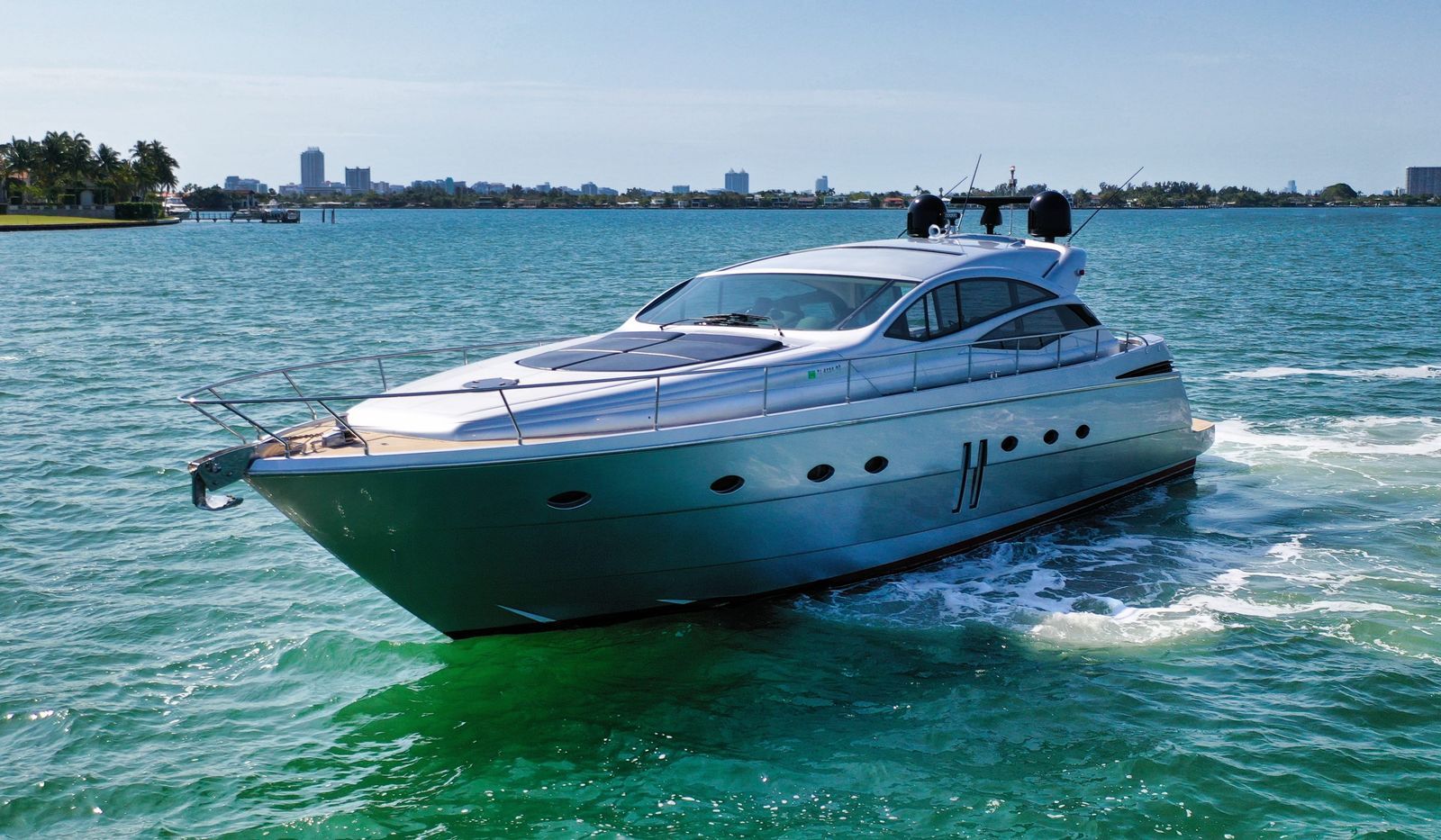
And since we're talking about the full South Florida experience, one light aside: a lot of our clients pair a rental with a Yacht Charter to turn a weekend into something memorable, the supercar by day and the water by evening. No pressure, just an option worth knowing about.
So, Should You Rent or Buy?
Here's the framework, decisively but fairly. Run your realistic days-per-year number, and be honest with yourself rather than aspirational. Stack the true costs of ownership, with depreciation front and center because it's the largest of them. Weigh the South Florida factors, the salt air, the storage, the insurance climate. And be honest about how much variety actually matters to you, because that flexibility dividend is real value that never shows on paper.
For most occasional and variety-driven enthusiasts, the rent vs buy exotic car math favors renting, often by a wide margin. You get the cars, the moments, and the flexibility without the depreciation and the workload. For the committed high-mileage driver, the long-term holder with a garage, and the collector of appreciating rarities, ownership is the right and rewarding choice. Neither answer is universally correct. Yours just needs to match your actual life.
Why Trust Rushing Rentals for the Rental Side of the Math
If renting is where you land, choose an operator who treats you straight. We were founded in 2020, which gives us six-plus years of doing this in one of the most demanding luxury markets in the country. More than 750 clients have trusted us, we run a fleet of 25-plus vehicles, and we operate across three-plus locations based in Aventura and North Miami Beach. You can read more on our About page.
We say all that not to sell you, but because trust is the whole game with a high-value reservation. We'd rather be the insider who tells you honestly when buying makes sense than the operator who pretends renting is always the answer. It isn't. But when it is, we're here and we're easy to reach.
Frequently Asked Questions
Is renting an exotic car cheaper than owning one?
It depends entirely on usage. For low annual usage, meaning a handful of drives a year, renting is dramatically cheaper per drive, because ownership's fixed costs get divided across very few days. For high, consistent usage, ownership narrows the gap and can eventually win, since those same fixed costs spread across many driving days. Run your realistic days-per-year number against a rental day rate range and the answer for your situation becomes clear.
How much does an exotic car really depreciate?
Depreciation is typically the largest single cost of ownership, and many mainstream exotics shed a substantial double-digit percentage of their value in the first two to three years. The rate varies by model, demand, and how quickly the lineup refreshes. The important exception is that a small set of rare, limited-production models hold value or even appreciate, so exotic car depreciation isn't universal, it's just the norm for most current-production cars.
What does exotic car maintenance actually involve?
More than people expect. Service intervals are both time-based and mileage-based, so they arrive whether or not you drive much. High-performance tires wear quickly and cost real money to replace. Specialist labor commands premium rates, and service networks are limited, so exotic car maintenance is a logistics and calendar burden as well as a financial one. You plan around parts availability and appointment windows, not just cost.
Can I rent a car for a few days to test it before buying?
Absolutely, and we recommend it. A multi-day rental is genuine due diligence, letting you live with the ergonomics, ride quality, visibility, and daily reality of a specific model before committing to a purchase. Browse Our Fleet to find the exact car you're considering, spend real days with it, and make an informed decision in either direction.
What do I need to rent an exotic car in Miami?
The minimum age is 18. You'll need a valid driver's license and active personal car insurance to drive yourself. Drivers aged 18 to 21 may face a higher refundable deposit. If you don't have a personal policy or prefer not to drive, our chauffeur service is a straightforward alternative that removes the insurance requirement.
Is a monthly rental a good middle ground?
For many people, yes. A monthly exotic car rental Miami program gives you consistent, extended access to a car without depreciation, insurance headaches, maintenance scheduling, or resale friction. It's especially well suited to seasonal residents, extended stays, and anyone who wants a car for a season of life rather than a long ownership commitment.
Let's Talk It Through
Whether you're leaning toward buying and want to test-live a model first, or you've decided renting is the smarter play, we're happy to help you think it through with zero pressure. Browse the machines on Our Fleet, or reach out through our Contact page and we'll walk you through options that fit your real usage and your timeline.
Call or WhatsApp us at (850) 218-5463, email info@rushingrentals.co, or say hello on Instagram at @rushingrentals. Run the honest math, then come drive the result.