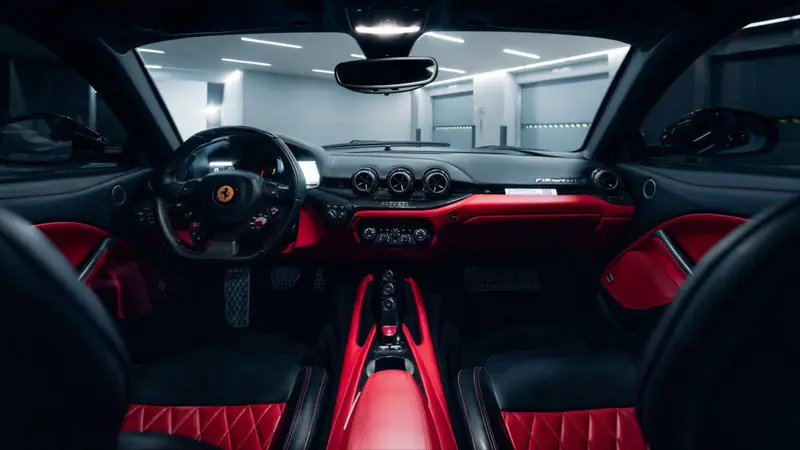
Driving in Miami as a Visitor: Traffic, Tolls, and Parking
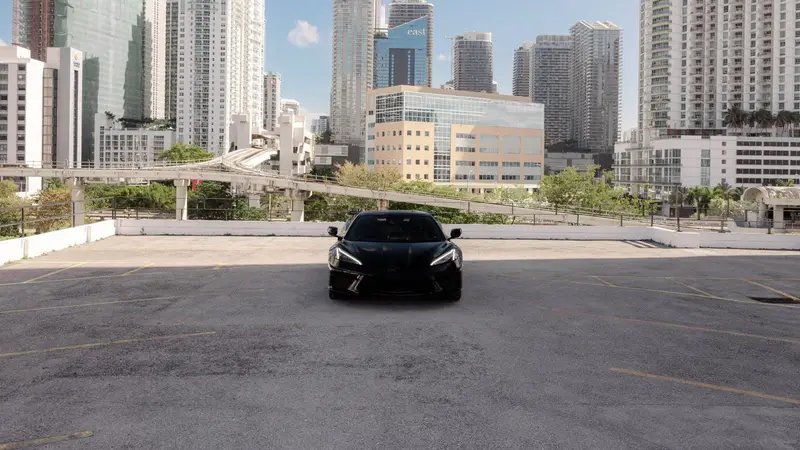
Miami driving has a reputation, and it is only partly deserved. Yes, the traffic can be loud, the causeways get busy, and drivers here move with a certain confidence. But the truth is that driving in Miami is very manageable once you understand the rhythms of the city, how the tolls work, and where to put a valuable car when you arrive. This driving in Miami visitor guide is exactly that: a practical, street-smart look at the logistics, not a roundup of pretty routes. It exists to help you feel prepared instead of overwhelmed the moment you pick up your keys.
We are based in Aventura, we have been doing this since 2020, and we have coordinated arrivals for more than 750 clients coming into South Florida from all over the world. That means we have answered nearly every question a first-time visitor can ask, from "How do the toll lanes work?" to "Where do I park a Lamborghini in South Beach?" What follows is the honest version, drawn from that experience.
Miami Traffic, Honestly: What to Expect and When
Miami is a coastal city stitched together by a handful of major arteries, and understanding those arteries is most of the battle. Once you know where the pressure points are, the whole map starts to make sense.
I-95 is the north-south spine of the region. It runs from downtown up through Aventura and into Broward County toward Fort Lauderdale, and it carries the bulk of the daily commuter load. During peak hours it can slow to a crawl, especially near the downtown interchange and around the exits feeding the airport. It is also the fastest way to cover distance when it is flowing, which it usually does outside of rush windows.
US-1, also called Dixie Highway and Biscayne Boulevard depending on where you are, is the surface-street alternative that runs roughly parallel to I-95 in many stretches. It is signal-heavy and can be slow, but it keeps you off the highway and closer to the neighborhoods. Around Brickell and downtown, US-1 and the surrounding grid tighten up considerably, particularly in the late afternoon when the financial district empties out.
The causeways are their own category. The MacArthur Causeway connects downtown to South Beach and is the classic postcard drive, with the cruise port and the islands on either side. The Julia Tuttle Causeway links the mainland near Midtown to the middle of Miami Beach and tends to move faster because it has no traffic signals. Both can back up when the beach is busy, especially on weekends and around events.
Speaking of events, Miami's calendar spikes congestion in predictable ways. Ultra Music Festival floods downtown and the Bayfront Park area in the spring. Art Basel fills up Miami Beach and the Design District in early December. The Miami International Boat Show brings serious volume to the beach and the causeways, and the Formula 1 weekend at Hard Rock Stadium up in Miami Gardens reshapes traffic across the north end of the county. None of this should scare you off. It simply means that if your visit overlaps one of these weekends, you plan around it. A luxury car rental in Miami is far more enjoyable when you are not sitting in avoidable gridlock, and a little foresight makes all the difference.
Timing your drives to avoid the worst of it
The single most useful habit for a visitor is to time your drives around the rush windows rather than through them. Traffic tends to build in the morning, roughly from the start of the workday, and again in the late afternoon into early evening as everyone heads home. Those are the hours to avoid if you have a choice.
If you are planning a beach run, aim for mid-morning, after the commuter surge has cleared, or head over in the mid-evening once the afternoon crush has thinned out. The causeways in particular flow much better outside peak hours. Late-night driving in Miami is often wide open and, frankly, one of the best times to enjoy an exotic, when the city lights are on and the roads are quiet. Whenever possible, let a navigation app pick your route in real time. It will steer you around the day's specific bottlenecks better than any fixed rule.
Tolls and SunPass: How It Actually Works in a Rental
Here is a piece of good news that surprises a lot of first-time visitors: you will never stop at a toll booth in South Florida. The entire system is cashless and all-electronic. There are no coin baskets, no attendants, and no reason to keep a stack of singles in the cupholder. You simply drive, and the toll is read automatically by an overhead gantry as you pass beneath it.
Florida's toll network is built around SunPass, the state's electronic transponder system, along with toll-by-plate cameras that photograph license plates. On the highways you will see express lanes and dedicated toll roads that all work this way. One thing to understand is the 95 Express concept: on stretches of I-95, there are dynamically priced express lanes in the center, separated from the general lanes by striped buffers. The price to use them changes based on demand, and the goal is to keep those lanes moving even when the free lanes are heavy. You are never required to use them, but they are there when you want to save time.
For a visitor, the important part is that our vehicles come transponder-equipped, so tolls are handled cleanly without anything for you to manage at the roadside or scramble to set up on arrival. You are not going to get flagged at a gantry or left guessing whether you owe something. Any toll costs are handled straightforwardly and stay modest relative to the trip; we keep the specifics simple and transparent so there are no surprises. The takeaway is that tolls, which sound like a headache to out-of-town drivers, are one of the easiest parts of driving here.
Parking an Exotic in Miami: Valet Culture and the Practical Realities
Parking is where a little planning pays off the most, especially when you are behind the wheel of something valuable.
Miami runs on valet culture, and in many neighborhoods it is simply the expected way to arrive. In South Beach, valet is the norm at hotels, restaurants, and clubs, and it is often the most sensible option given how tight and pedestrian-heavy the area is. Brickell leans heavily on both valet and structured garages, which fits its dense, business-district layout. Wynwood and the Design District both offer valet at most of the popular spots, along with a mix of lots and limited street parking that fills up fast on busy nights.
The practical case for valet or a secured garage becomes obvious when you are driving an exotic. A low, wide supercar parked in a tight street spot is exposed to door dings, curb rash, and the general chaos of a crowded block. Attended valet and gated garages give you supervision and controlled access, which is genuinely worth the peace of mind when the car is a Ferrari or a Rolls Royce. This is not about fear. Plenty of visitors park on the street without incident. It is simply about matching the value of the car to the level of care, and for most people that math favors valet.
Costs for parking and valet vary widely by neighborhood and by night, and they climb during events, so build in a bit more flexibility on a busy weekend than on a quiet Tuesday.
Garages vs. street vs. valet
Think of it as three tools for three situations.
Valet is the easy button in dense, high-traffic areas. You hand off the car at the door, skip the search for a space, and let a professional handle the tight maneuvering. For exotics with low ground clearance, this removes the stress of squeezing into a spot with an aggressive curb.
Garages make sense when you want to park once and explore on foot, or when you want secured, covered storage overnight. Look for garages with wider spaces and gentle ramps, since some older structures have steep entries that can scrape a low front splitter.
Street parking is fine in calmer, residential-adjacent areas and during off-peak hours, but it is the riskiest choice for a valuable car in a busy district. Tight parallel spots and unpredictable neighboring drivers are real considerations, and low clearance means you have to watch curbs carefully. When in doubt, especially in South Beach or Wynwood on a weekend, choose the attended option.
Neighborhoods to Know Before You Drive
You do not need to memorize the whole map, but a quick orientation to how each area actually drives will make your first day far smoother. This is about pace and road character behind the wheel, nothing more.
South Beach
Dense, slow-moving, and full of pedestrians. Ocean Drive and the surrounding grid are stop-and-go almost by design, with people crossing constantly and one-way streets to navigate. An exotic draws a crowd here, which is part of the fun, but do not expect to move quickly. Plan for valet and patience.
Brickell and Downtown
Miami's financial core drives like a proper city center. Expect one-way streets, tight blocks, and real congestion at peak hours as commuters flood in and out. Garages and valets dominate, and street parking is scarce. It is very drivable, just methodical, so give yourself extra time and let the navigation handle the one-way maze.
Wynwood and the Design District
Both are popular, walkable, and busy, which means limited street parking and narrow spots to watch for. Valet is common and often the path of least resistance. These areas reward arriving with a parking plan already in mind rather than circling the block hoping for a space.
Coconut Grove
A welcome change of pace. The Grove is greener, more relaxed, and tree-lined, with a calmer flow than the urban core. Driving here is genuinely pleasant, and parking pressure is lower than in South Beach or Brickell. It is a good place to get comfortable with an unfamiliar car before heading into denser territory.
Aventura and North Miami Beach
This is home base for us, and it happens to be some of the easiest driving in the area. The roads are wider, the layout mixes shopping and residential neighborhoods, and the pace is generally smoother than downtown. Being based here means we can coordinate your pickup or delivery efficiently, and it gives visitors a low-stress launch point for the rest of South Florida.
Fort Lauderdale
Head north and the region opens up. Fort Lauderdale and the broader Broward area tend to feel more spacious than the Miami core, with wider roads and longer open stretches along the water. It is a rewarding drive, and the kind of place where a convertible really earns its keep, top down along the coast with room to breathe.
Airport Coordination: MIA and FLL Pickup and Drop-Off
For most visitors, the first real question is not which car to drive but how to get into it smoothly after a flight. Arriving in an unfamiliar city, tired from travel, is not the moment you want to be sorting out complicated logistics.
Both Miami International Airport (MIA) and Fort Lauderdale-Hollywood International Airport (FLL) are busy hubs, and each has its own flow for pickups and rideshare staging. We handle the coordination so your car is ready when you land, whether that means meeting you at the airport or having a chauffeur waiting. This is the core of a good airport luxury car service in Miami: you step off the plane and the details are already taken care of.
For travelers who want to arrive in genuine style, a luxury sedan or a Rolls Royce with a professional chauffeur turns the airport run into part of the experience rather than a chore. And if the airport is not the most convenient handoff, we also deliver to hotels and private residences, so your car can be waiting at the front door when you are ready to start driving. The whole idea is a coordinated arrival with zero guesswork.
Choosing the Right Car for Miami Streets
Not every car is the right car for every part of Miami, and being honest about that is part of doing this well.
A low, wide exotic is pure theater on the open causeways and unforgettable for a statement arrival. A Lamborghini like the Lamborghini Huracan Evo Coupe is the kind of car that makes the Julia Tuttle feel like an event. It is also a car that demands care with ground clearance over steep garage ramps and patience in tight parking. That trade-off is completely worth it for the moments it delivers, as long as you know it going in.
For practical, everyday driving, a roomy SUV or a comfortable sedan is the smarter tool. Browse the SUV options and you will find picks like the Cadillac Escalade or the Mercedes AMG GLE 53, both of which handle grocery runs, families, luggage, and stop-and-go traffic without drama while still making an impression.
If your trip is built around the coast and the causeways, a convertible is hard to beat, and if you want performance without the full exotic footprint, a sports car splits the difference nicely. With a fleet of more than 25 vehicles spanning the practical to the extraordinary, the real luxury is matching the car to the plan. Many visitors do exactly that, pairing a sensible daily driver with a dream car for the nights and moments that call for it.
Self-Drive vs. Chauffeur: An Honest Comparison
Both are legitimate choices, and the right one depends entirely on your trip.
Self-drive is for confident drivers who want the full experience of piloting the car themselves. If you are comfortable in unfamiliar cities and you came to Miami specifically to feel the throttle and steering yourself, this is the way. You will need a valid license and active personal car insurance, which we will get to below.
Chauffeur suits several situations cleanly. If you do not carry your own auto insurance, a chauffeur is the straightforward solution rather than a workaround. If you are uneasy about navigating unfamiliar roads, or you would simply rather enjoy the scenery, have a conversation, and skip the parking hunt entirely, a professional driver makes the whole trip effortless. A chauffeur service in Miami also pairs beautifully with a night out, when you would rather not think about valet lines or getting the car home.
Neither option is the "better" one. They serve different travelers and different evenings, and plenty of visitors use both across a single trip.
Rental Basics Visitors Should Know
A few essentials, stated plainly so there are no surprises.
The minimum age to rent is 18. To self-drive, you need a valid driver's license and active personal car insurance. If you do not have your own insurance, the clean alternative is to book a chauffeur instead, which sidesteps that requirement entirely. Drivers aged 18 to 21 may be subject to a higher refundable security deposit, which is standard practice given the value of the vehicles. That is the short version of how to rent an exotic car here; the deeper walk-through of the full booking process lives in our other guides.
On trust, a quick word. We have been operating since 2020, which is more than six years of experience coordinating exotic rentals across South Florida. We have served over 750 happy clients, we maintain a fleet of more than 25 vehicles, and we operate from three-plus locations. If you want the full background, our About page lays out the track record. The point is simply that you are working with an established operation, not a fly-by-night listing.
Frequently Asked Questions
Is Miami hard to drive in for visitors?
It has a busy reputation, but it is very manageable with a little preparation. Learn the rush-hour windows, understand that tolls are cashless and automatic, and plan your parking in dense neighborhoods. Do those three things and the city opens up quickly, even for a first-time visitor.
Do I need my own insurance, or can I book a chauffeur?
Active personal car insurance is required to self-drive, along with a valid license. If you do not have your own coverage, a chauffeur is the clean alternative and removes that requirement entirely, so you can still enjoy the car without any complications.
How do tolls work in a rental here?
Florida uses cashless, all-electronic tolling, so there are no booths to stop at. Our cars are transponder-equipped, which means tolls are handled automatically as you drive and there is nothing for you to set up or manage at the roadside. Costs stay modest and are handled transparently.
Where should I park an exotic in Miami?
Attended valet or secured garages are the safest bets in dense neighborhoods. Valet is the norm in South Beach, Brickell, Wynwood, and the Design District, and it removes the stress of tight street spots and curb-scraping ramps. It is worth the peace of mind for a high-value car.
Can you deliver to MIA or FLL?
Yes. Airport pickup and drop-off are available at both Miami International and Fort Lauderdale-Hollywood International, and we also deliver to hotels and private residences. The goal is a coordinated, seamless arrival so your car is ready when you land.
What is the minimum age and license requirement?
The minimum age is 18. You need a valid driver's license, and active personal car insurance is required to self-drive. Drivers aged 18 to 21 may be subject to a higher refundable security deposit, and those without their own insurance can book a chauffeur instead.
Is a Lamborghini practical for daily Miami driving?
Candidly, no, and that is fine. A Lamborghini is thrilling on the causeways and unbeatable for a statement arrival, but it is less ideal for tight parking and heavy stop-and-go. For everyday driving, an SUV or sedan is the smarter pick, and many visitors pair both to get the best of each.
When is the best time to drive to avoid traffic?
Aim for off-peak windows, outside the morning and late-afternoon rush periods. Mid-morning and mid-evening tend to flow best, and late nights are often wide open. Also plan around major event weekends like Ultra, Art Basel, the Boat Show, and the Formula 1 weekend, which spike congestion in specific areas.
Ready to Arrive the Easy Way
The heart of a great Miami trip is a smooth, coordinated arrival, and that is exactly what this guide is built to give you. You do not have to figure out the tolls, the causeways, and the valet lines on your own. With a little prep and the right partner, driving here goes from intimidating to genuinely enjoyable.
Browse the full fleet at Rushing Rentals to find the car that fits your plan, whether that is a practical daily driver, a convertible for the coast, or an exotic for the moments that call for one. When you are ready, call or WhatsApp us at (850) 218-5463 to arrange airport pickup and confirm the exact car and dates. You can also reach us at info@rushingrentals.co or on Instagram at @rushingrentals. Land, step into your car, and let Miami come to you.