Ferrari vs Lamborghini: Two Philosophies of the Supercar
Picture a warm evening on Ocean Drive. A red Ferrari idles at the curb, its exhaust burbling under the neon. A green Lamborghini pulls up alongside, low and angular, drawing every eye on the sidewalk before it has moved an inch. To most people passing by, these two cars say the same thing. Fast. Expensive. Italian. Interchangeable symbols of having made it.
That reading misses almost everything interesting about them. Ferrari and Lamborghini are not two versions of the same idea. They are two different answers to a single question that has shaped the last sixty years of motoring: what should a supercar actually be? One answer grew out of the racetrack and treats the road car as a translation of competition. The other grew out of a refusal to follow anyone's rules and treats the car as spectacle. The whole Ferrari vs Lamborghini debate, stripped of the badge worship, is really a conversation about philosophy.
This piece is not a spec sheet, and it is not a verdict on which car you should rent or buy. It is a look at heritage and identity, at how two Italian companies born only a short drive apart came to represent such different ideas of what desire on four wheels looks like. Understanding that difference is the most useful thing you can do before you ever sit in either one.
A Rivalry Born From an Insult (or So the Story Goes)
Ferruccio Lamborghini was not a struggling dreamer. By the early 1960s he was one of the most successful industrialists in Italy, having built a fortune manufacturing tractors, and later heating and air conditioning systems, for a country rebuilding after the war. He was mechanically gifted, wealthy, and he owned several Ferraris. He was, in other words, exactly the kind of customer Enzo Ferrari should have wanted to keep happy.
The popular account, told and retold so many times it has hardened into legend, goes like this. Lamborghini found the clutch in his Ferrari temperamental, and being a man who understood machinery, he took his complaints directly to Maranello. Enzo Ferrari, so the story goes, responded with something close to disdain, suggesting that a maker of tractors was in no position to lecture him about sports cars. Whether the exchange happened exactly that way, or at all, is impossible to confirm. It has the shape of a myth polished by decades of retelling. What is documented is the result.
In 1963, Automobili Lamborghini was established in Sant'Agata Bolognese, only a short distance from Ferrari's home turf near Modena. Lamborghini set out to build grand touring cars on his own terms, cars that would be as refined and as fast as anything from his former supplier, and arguably more comfortable and better built. The company existed, at least in part, to prove a point.
That single origin, real or embellished, sets up the entire framework this piece unpacks. Ferrari was already a racing institution when Lamborghini appeared. The new company did not have to be the same thing. It got to be the alternative.
Why This Story Still Matters
The reason the anecdote endures is not that it makes for a good dinner story. It is that the rivalry became a foundational identity rather than marketing. Ferrari did not set out to define itself against Lamborghini. It was busy winning races. Lamborghini defined itself against Ferrari from day one, because that opposition was the entire reason it existed.
It is worth saying clearly that both companies have earned enormous respect over the decades, from each other and from the wider world of engineering. Neither is the villain in this story. The tension between them has made each sharper, more distinct, more sure of what it is. That is the healthiest kind of rivalry, the kind where two competitors push one another toward excellence without either needing the other to fail.
Ferrari's Philosophy: Motorsport First
To understand Ferrari, start with the badge. The prancing horse was a competition emblem long before it became shorthand for luxury. Enzo Ferrari founded his company to go racing, and everything the road cars became flowed downstream from that ambition. The famous line, attributed to Enzo himself, was that he sold road cars to fund the racing. Whether or not he ever put it quite so bluntly, the priorities are stitched into the company's DNA.
That heritage runs through Formula 1 and endurance racing, and it bleeds into every car Ferrari builds for the street. You see it in the engineering discipline, the obsession with weight distribution, the long tradition of layouts that keep mass low and central for balance. A Ferrari road car is designed by people whose day job is chasing lap times, and that mindset does not switch off when they turn to the customer cars.
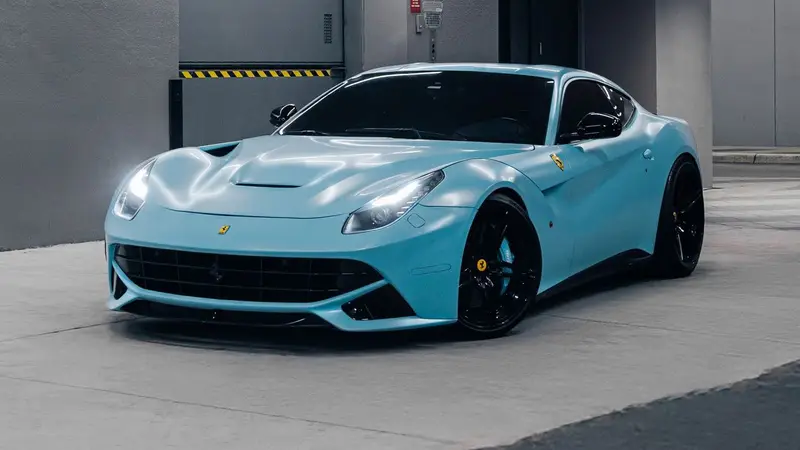
Look across the modern lineup and the thread holds. The Ferrari F12 Berlinetta carries the front-engine V12 tradition that stretches back through the marque's grand tourers, a naturally aspirated twelve up front driving the rear wheels, the classic Ferrari configuration executed at a very high level. The 812 pushed that formula further still. The SF90 brought hybrid power borrowed directly from Formula 1 thinking, and the 296 reinterpreted the V6 with the same competition logic. These are not spec-sheet trophies. They are illustrations of a single idea followed across decades: the road car as a translation of the track.
The character that results is emotional but disciplined. A Ferrari wants to be driven well. It rewards precision, smoothness, and commitment, and it gives back a feeling of balance that few things on four wheels can match. There is passion in it, but it is passion with an engineer's restraint underneath.
The Sound and Feel of Discipline
Get one moving and the philosophy becomes something you feel rather than read about. The steering is surgical, quick and honest, feeding information back to your hands the way the best racing cars do. The chassis rewards a smooth, thinking driver. Snatch at the controls and it will let you know. Flow with it and it becomes almost telepathic.
Even the sound feels engineered rather than theatrical. A Ferrari V12 or flat-plane V8 does not shout for the sake of shouting. It climbs through its range with a hard, metallic precision, a sound that reads as intent rather than showmanship. There is drama, but it is the drama of a machine doing exactly what it was built to do, at the exact edge of its capability. That is the whole Ferrari argument in one experience: speed as the natural byproduct of doing everything correctly.
Lamborghini's Philosophy: Theater and Defiance
Lamborghini spent most of its history free of the obligation that defined Ferrari. It was not built to go racing. For decades it did not race at all in any serious way, and that freedom turned out to be the most important thing about it. Without a track program dictating priorities, Lamborghini could chase something Ferrari could not always afford to chase: pure spectacle. Presence over pedigree. Drama for its own sake.
The design lineage tells the story better than any argument could. The Miura, launched in the mid 1960s, stunned the world with a mid-engine layout and a shape so sensuous it made everything around it look ordinary. It was arguably the first true supercar, and it announced that this new company intended to lead on beauty and audacity. Then came the Countach, and the Countach changed everything. That sharp wedge, all angles and impossible flatness, rewrote what a supercar was allowed to look like. It hung on bedroom walls across the world. It made a promise about the future that the future is still trying to keep.
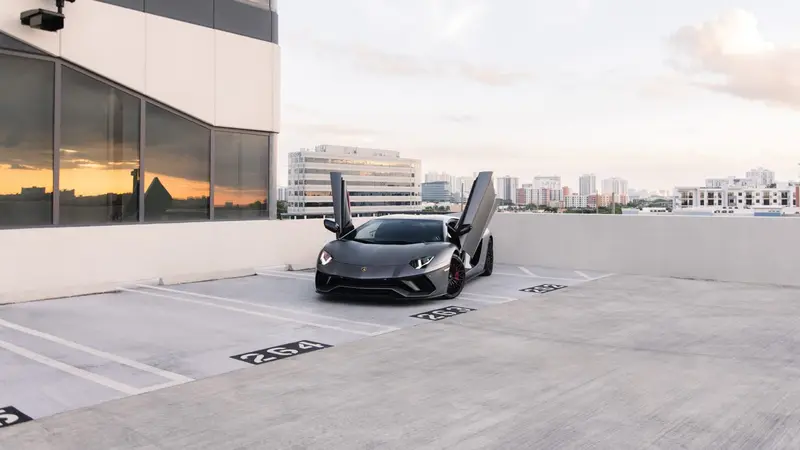
The Diablo carried the wedge forward into the 1990s, and the Aventador continued the shape and the signature scissor doors into the modern era, that theatrical upward swing that turns every arrival into an event. The naturally aspirated V12 that powered those flagships is one of the great engines in history, and Lamborghini let it be loud, let it be raw, let it feel a little bit dangerous.
The character that results is unapologetic. Where the Huracán and Aventador aim to thrill, they do it with volume and visual force. This is a different pursuit, not a lesser one. Lamborghini decided early that a supercar should make your pulse jump before you have even turned the key, and it has never wavered from that conviction.
Designed to Be Seen
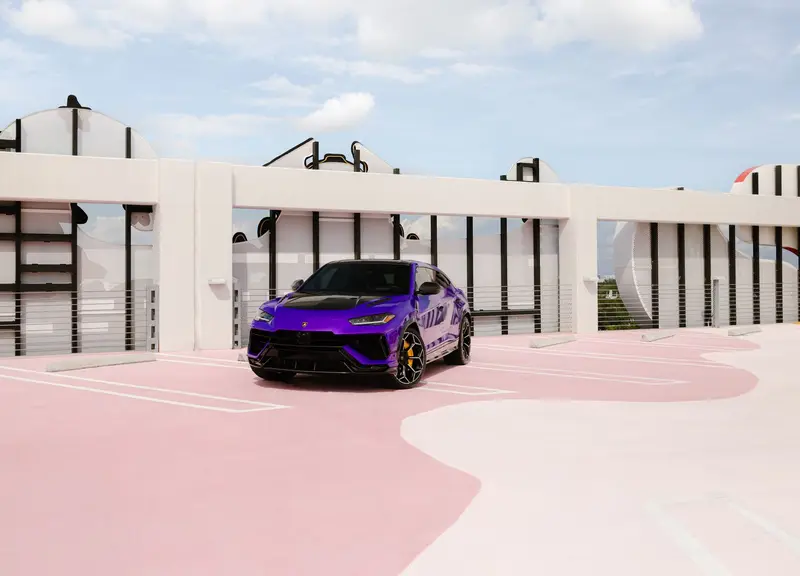
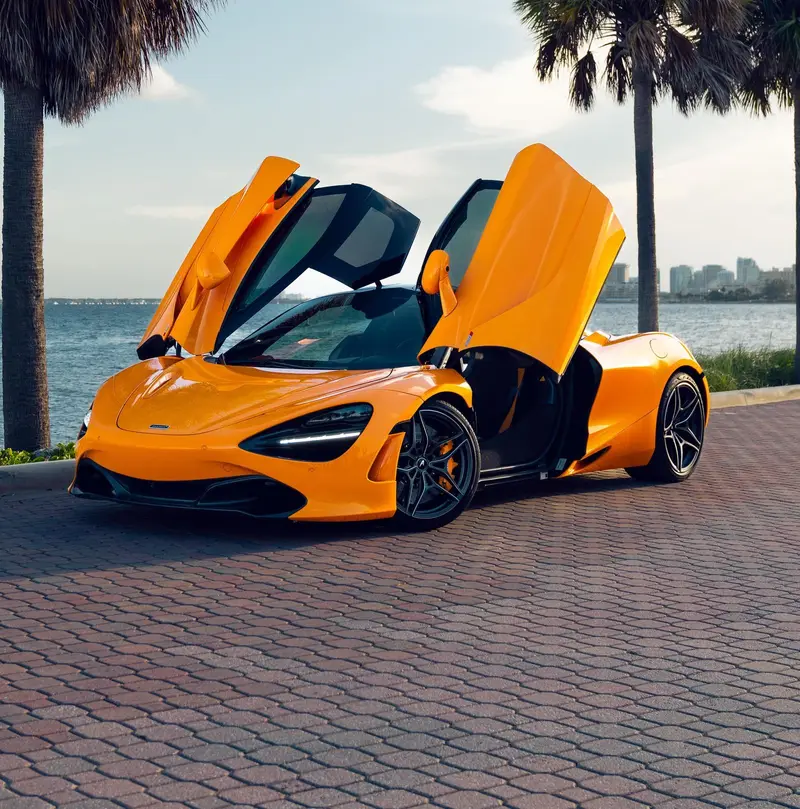
A Lamborghini is a visual event first. The wedge silhouette, the hard creases, the aggressive stance low to the ground, all of it is engineered to be noticed. The colors matter too. Lamborghini has never been shy about a searing green, a violent orange, a yellow that seems to generate its own light. These are not shades chosen to blend into a valet line. They are chosen to command it.
The car makes a statement before it moves, and that is precisely the point. Everything about the design language says that being seen is not a side effect of the experience. It is a core part of it. Where Ferrari asks you to appreciate what the car does, Lamborghini insists that you look at what the car is.
How the Two Philosophies Show Up Today
Put the two side by side in the present day and the contrast is easy to read once you know what to look for. Ferrari carries itself with precision and a certain restraint, even in its wildest cars. The design tends toward elegance and aerodynamic logic, shapes that look the way they do because the wind and the racetrack demanded it. Lamborghini leans the other way, toward rawness and showmanship, shapes that look the way they do because they are meant to stop you in your tracks.
You hear it in the exhaust note. You feel it in the driving character, the Ferrari's smooth reward for skill against the Lamborghini's louder, more immediate assault on the senses. You even see it in the attention each draws, which is a different flavor entirely. None of this makes one better than the other. It gives them different answers to the same question, and the interesting work is figuring out which answer speaks to you.
This is where the mindset of any serious supercar buying guide starts, long before anyone talks about horsepower figures or option lists. The most important thing to understand is what you are actually drawn to. Do you want the machine that rewards you for driving it beautifully, or the one that turns every trip to dinner into an entrance? Neither preference is more sophisticated than the other. They are just honest about different desires.
Two Kinds of Attention
There is a useful way to think about the attention each car commands. A Ferrari tends to read as a connoisseur's choice. The people who really know cars lean in when one goes by, appreciating the details, the lineage, the discipline behind the shape. It rewards knowledge. It flatters the observer who understands what they are looking at.
A Lamborghini turns every head on the block, no expertise required. It does not wait for the connoisseur to notice. It reaches everyone at once, the enthusiast and the passerby alike, with the same immediate force. Both effects are extraordinary. They simply command a room in completely different ways, and once you notice the difference, you cannot unsee it.
Ferrari and Lamborghini in Pop Culture and on the Street
Both brands long ago outgrew the world of cars to become cultural icons, and they did it along paths that mirror their philosophies exactly. Ferrari built its cultural weight on decades of motorsport prestige and old-world glamour. It is the marque of Formula 1 Sundays, of racing history stretching back generations, of a certain European elegance that money alone cannot quite buy. To many people, Ferrari signals taste as much as wealth.
Lamborghini took a different road into the culture. It became shorthand for arrival, for boldness, for a kind of joyful excess. It shows up in music, in film, in the endless scroll of social media, whenever someone wants to signal that they have made it and they are not being subtle about it. The scissor doors, the impossible colors, the sheer noise of the thing all translate perfectly to a phone screen. If Ferrari is the language of the connoisseur, Lamborghini is the language of the moment.
Nowhere are both cultural readings more legible than in Miami. On Ocean Drive, exotic cars are part of the everyday visual language, and both marques fit right into the scene without ever feeling out of place. Roll through Brickell in the evening and you will see them threaded through the traffic, red and green against the glass towers. Park near the Design District and they belong there completely, alongside the boutiques and the architecture. In most cities an exotic car is an event. In Miami it is simply part of how the city looks at itself, which is exactly why the difference between the two philosophies is so easy to observe here.
Why Miami Is the Place to Understand the Difference
If you wanted to build a laboratory for understanding the difference between these two philosophies, you would build something that looks a lot like South Florida. The weather is warm nearly year-round, which means open-top driving is almost always on the table and the cars are never hidden away for a season. The roads offer variety, from stop-and-start boulevards to open coastal stretches. And the car culture genuinely celebrates both marques rather than treating either as a novelty.
The routes matter, because the right road reveals the right car. A cruise down Ocean Drive is theater by definition, slow-moving and highly visible, the kind of place where presence counts for everything. A run up A1A toward Fort Lauderdale opens things up, with the ocean on one side and stretches where a car's balance and composure actually get to breathe. The causeways linking the mainland to the beaches give you those clean, elevated moments where the city drops away and it is just you, the water, and the machine. This is a landscape built for sports car driving in a way few places are.
Experiencing this kind of car in this kind of setting teaches you more in an afternoon than any amount of reading. The abstract debate becomes concrete the moment the road puts each philosophy to the test.
A Different Car for a Different Route
There is a natural pairing here, and it is worth drawing lightly rather than as a rule. The Ferrari suits a purposeful drive up A1A, the sort of stretch where balance and feel come alive and the car can reward your inputs with real feedback. That is the environment where its discipline pays off, where doing it well becomes its own quiet thrill.
The Lamborghini owns the slow roll down Ocean Drive, where presence is the entire point and the crowd is part of the experience. It was built to be seen at exactly this speed, in exactly this light, against exactly this backdrop. Neither pairing is a verdict. It is just an observation about how each philosophy finds its perfect stage. The city, generously, offers both stages within a short drive of each other.
Which Philosophy Are You?
By now the shape of the two approaches should be clear enough to hold up against your own instincts. The Ferrari mindset belongs to the connoisseur and the purist. It values engineering, heritage, and the specific reward that comes from driving something well. If you find yourself drawn to a machine that gives back more the more skill and attention you bring to it, that responds to precision, that carries the weight of racing history in its bones, you likely lean Ferrari.
The Lamborghini mindset belongs to the extrovert and the showstopper. It values drama, presence, and the pure joy of being seen. If the thought that quickens your pulse is the entrance rather than the apex, the color that stops traffic and the doors that swing skyward and the sound that arrives before the car does, you likely lean Lamborghini.
Here is the honest part, though. Plenty of enthusiasts love both, deeply and without contradiction. The rivalry is not a wall between two camps so much as a spectrum most car people move along depending on their mood, the day, the road. And the rivalry itself is part of what makes each marque better. Without Lamborghini pushing on spectacle, Ferrari might feel less need to guard its purity. Without Ferrari setting the engineering standard, Lamborghini's drama might have less to play against. The tension has kept both sharp for sixty years. That is worth appreciating regardless of which badge you would put in your own driveway.
Experience Either Philosophy in Miami
The good news is that you do not have to settle this in the abstract, and you certainly do not have to own either car to feel the difference for yourself. In Miami you can spend a day with each and let the roads do the arguing. Take the Ferrari up the coast in the morning and the Lamborghini down Ocean Drive as the evening lights come on, and by nightfall you will know which philosophy speaks to you far better than any article could tell you.
If that is a day you would like to have someday, we would be glad to make it a straightforward one. Rushing Rentals has been doing this since 2020, with more than 750 clients served, a fleet of over 25 vehicles, and multiple locations across South Florida. You can explore the Ferrari and Lamborghini options whenever the idea takes hold, and if you want to know more about who we are before then, our About page is a good place to start. When the time feels right, you can reach us by call or WhatsApp at (850) 218-5463, by email at info@rushingrentals.co, or on Instagram @rushingrentals. No rush. The roads will still be here.
Frequently Asked Questions
Is Lamborghini really faster than Ferrari?
It depends entirely on which models you compare, and even then the answer matters less than most people think. Both marques build cars that far exceed anything you can legally or safely use on a public road, so in real-world terms the difference in outright pace is largely academic. The more interesting truth is that they pursue speed differently. Ferrari chases it through racing-bred precision and balance, the kind of speed that comes from a car doing everything correctly. Lamborghini chases it through raw drama and force. Both get you there. They simply make the journey feel like two different things, and neither approach is the objectively superior one.
Why was Lamborghini founded?
Ferruccio Lamborghini, already a wealthy and successful industrialist, established Automobili Lamborghini in 1963 to build grand touring cars on his own terms, cars he felt could be as fast as the best while being better built and more refined. The widely told anecdote is that a dismissive response from Enzo Ferrari over a clutch complaint pushed him to prove he could do it himself. That story is the popular account rather than confirmed history, but the outcome is well documented. The company was born as a deliberate alternative to what already existed.
Which is better, Ferrari or Lamborghini?
Neither is objectively better, because they answer different questions. Ferrari is the answer for someone who values engineering, heritage, and the reward of driving well. Lamborghini is the answer for someone who values drama, presence, and the joy of being seen. The right choice depends on which of those things speaks to you, which brings it back to the philosophy question at the heart of this piece. Both marques hold each other in genuine respect, and the rivalry between them has made each better over the decades.
Does Ferrari still race and Lamborghini doesn't?
Ferrari's identity is inseparable from motorsport. It remains a fixture in Formula 1 and has a long, storied record in endurance racing, and that competition heritage shapes its road cars directly. Lamborghini built its identity primarily around road-car drama rather than racing for most of its history. That said, it is not absent from the track today. Lamborghini competes in its own Super Trofeo one-make series, in GT racing, and has entered prototype racing at the top level of endurance competition. So the old shorthand that one races and one does not is no longer accurate. The difference now is one of emphasis and origin rather than presence.
Can I drive a Ferrari or Lamborghini in Miami without buying one?
Yes. Exotic rentals let you experience either philosophy for a day or longer without the cost and commitment of ownership, which is often the smartest way to understand what you are actually drawn to. Renting also gives you a low-pressure way to test-drive the ownership experience before committing to a purchase. South Florida, with its year-round weather and open roads, is an ideal place to do it. If you want to see what is available, the Ferrari and Lamborghini pages are the place to look when the idea feels right.