The First-Timer's Exotic Car Terms Glossary, Explained
You have probably done this already. You are scrolling through listings, admiring a Lamborghini in Miami sunlight, and the description reads like a foreign language. "620 horsepower." "Twin-turbo V8." "AWD." "0-60 in 3.2 seconds." You nod along, pretend it all makes sense, and quietly wonder which of those numbers actually matters for the way you want to drive.
Here is the good news: none of that jargon should stand between you and the car you want. You do not need a degree in mechanical engineering to enjoy a Ferrari on A1A. You just need a plain-English translation of the words that keep showing up on spec sheets and rental pages.
That is exactly what this piece is. Consider it the exotic car terms glossary every first-timer wishes they had before their first booking. We will decode the numbers, the badges, and the shorthand, and we will do it without any sales pressure. This is pure education from people who spend their days around these cars and these roads.
The real payoff is not sounding smart at dinner. It is matching a car to how you actually want to drive it in Miami. A slow, top-down crawl down Ocean Drive asks for very different things than an open pull up A1A toward the Keys. Once you can read the spec sheet, you can choose with intention instead of guessing. Let's get into it.
How to Read This Glossary
We have grouped the terms by what they tell you, so you can skip to whatever you are curious about: power, speed, engine layout, drivetrain, transmission and tech, body styles, handling and chassis, and finally the listing shorthand that trips up almost everyone, the badges and trims and category labels.
One promise runs through all of it: every term ties back to a real rental decision, not abstract trivia. This is exotic car specs explained for someone who wants to drive, not someone studying for a test. If a number does not change how you would enjoy the car in South Florida, we will tell you that too.
Power: What the Big Numbers Actually Mean
Horsepower vs. Torque
These two words get thrown around constantly, and they are not the same thing. Understanding horsepower versus torque is the single most useful thing a first-timer can learn.
Torque is the immediate shove. It is the force that pushes you back into the seat the instant you press the accelerator. When a car feels "punchy" off the line, that is torque at work. Horsepower is how that force translates into sustained, building speed. It is the number that keeps the car pulling hard as you climb toward higher speeds. Torque gets you moving with authority; horsepower keeps the momentum coming.
Both matter, just in different situations. In Miami, torque is what you feel at every light on Collins Avenue, that satisfying surge when the signal turns green. Horsepower is what shows up on a longer, open stretch where the car has room to stretch its legs. Neither number alone tells the whole story, and we will keep the figures general here because exact outputs vary by model and trim.
Naturally Aspirated vs. Turbocharged
You will see these terms on almost every exotic listing, and they describe two different characters rather than one being better than the other.
A naturally aspirated engine draws air in on its own, without forced induction. The power tends to climb with the revs and rewards you higher in the rev range. It often feels linear and connected, and it can produce a sound that enthusiasts chase for a lifetime. A turbocharged engine uses a turbo to force more air in, which typically delivers a stronger low-end punch. You feel more grunt earlier, with less waiting for the revs to build.
For a first-timer, the practical takeaway is simple. A turbocharged car often feels effortless and immediate in everyday driving. A naturally aspirated car can feel more dramatic and vocal as you push it. Neither is the "right" answer. It comes down to the personality you want for the day.
The Speed Trio: 0-60, Quarter-Mile, Top Speed
0-60 mph
This is the number that actually matters for real-world driving. Zero to sixty measures how quickly a car accelerates from a standstill to 60 miles per hour, and it is the most relatable figure on any spec sheet. It tells you what merging onto I-95 feels like, or what happens when you launch away from a light on Brickell Avenue.
If you only pay attention to one performance number as a first-timer, make it this one. A quick 0-60 time translates directly into the kind of everyday thrill you will feel every time you touch the accelerator.
Quarter-Mile
The quarter-mile time comes from the drag strip. It measures how long a car takes to cover a quarter mile from a standing start. It is a useful benchmark because it hints at how a car pulls through the gears, not just off the line. A strong quarter-mile figure suggests the car keeps delivering as speed builds. It is more of an enthusiast's reference point than something you will ever recreate on a public road, but it rounds out the picture.
Top Speed
Top speed is the headline number. It is the maximum speed a car can theoretically reach, and it looks fantastic in a listing. Here is the honest part: you will almost never legally approach it on public roads. There is no stretch of the MacArthur Causeway where a 200-plus mile-per-hour top speed becomes relevant.
We are not saying that to be a killjoy. We are saying it so you spend your attention on the numbers that actually shape your enjoyment. A top speed is a bragging right. A quick 0-60 is a daily pleasure. Weight your decision accordingly.
Under the Hood: Engine Layout and Configuration
Cylinders and Displacement
Engines are often described by their cylinder count and layout, written as V8, V10, or V12. The "V" refers to how the cylinders are arranged, and the number tells you how many there are. Displacement, measured in liters, describes the total volume those cylinders move.
As a rough guide, more cylinders and larger displacement tend to mean more character and a richer sound, though modern engineering complicates that neat rule. Turbocharging and clever design mean a smaller engine can produce enormous power today. Still, there is something unmistakable about a big multi-cylinder engine.
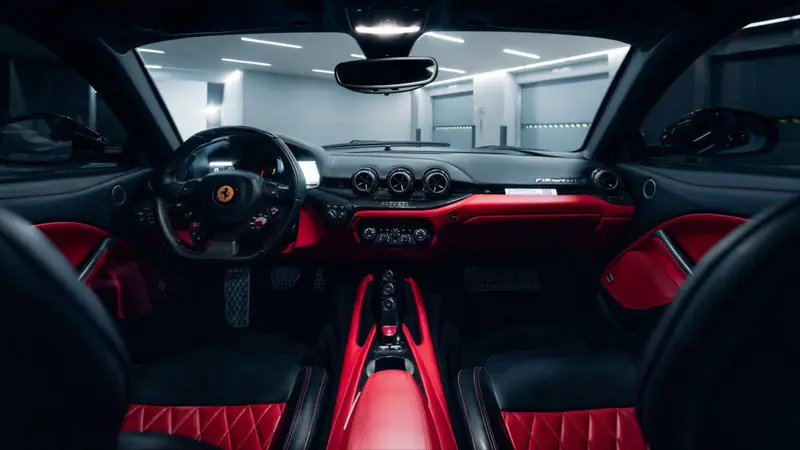
For texture, the Audi R8 Coupe V10 Plus is a classic V10 example, an engine known for its high-revving, vocal character. Step up to a V12 and you get the Ferrari F12 Berlinetta, a front-engine grand tourer with the kind of soundtrack that turns heads before it even moves.
Mid-Engine vs. Front-Engine
This describes where the engine sits in the car. A front-engine layout places the engine up front, ahead of the cabin, which is the traditional arrangement for grand tourers and many sports cars. A mid-engine layout positions the engine behind the driver but ahead of the rear axle, which lowers and centralizes the weight.
That placement broadly affects balance and the silhouette. Mid-engine cars often have that dramatic, cab-forward supercar shape and a planted, agile feel. Front-engine GTs tend to offer a longer, more elegant profile and a composed character suited to covering distance.
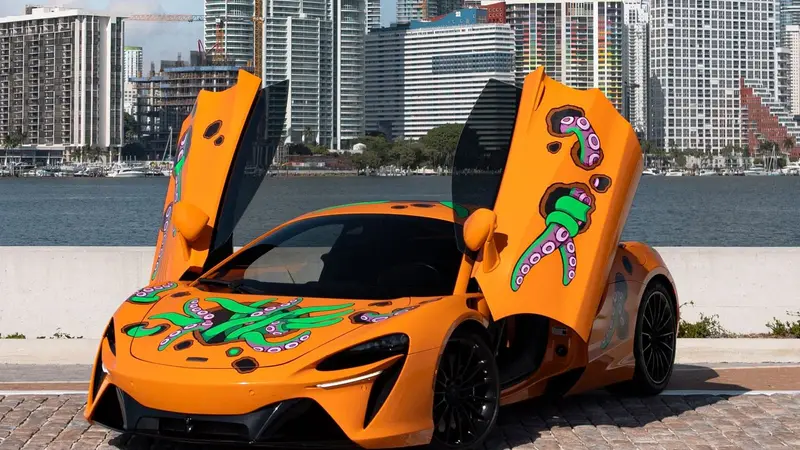
Neither layout wins outright. They serve different purposes. If you want the archetypal mid-engine supercar look and feel, McLaren and Lamborghini build some of the most recognizable examples on the road.
Drivetrain: RWD, AWD, and FWD
What Each One Means
Drivetrain describes which wheels receive the engine's power. There are three terms you will encounter.
RWD, or rear-wheel drive, sends power to the rear wheels. This is the classic sports-car setup, and it delivers an engaging, connected feel. AWD, or all-wheel drive, splits power between front and rear wheels for extra traction. FWD, front-wheel drive, sends power to the front wheels and is rare in the exotic world, more common in everyday cars.
Why It Matters for a First-Timer
This is where the choice becomes genuinely practical. AWD often adds confidence and traction, which is reassuring if you are a little nervous about handling serious power for the first time. It also earns its keep during a sudden Miami downpour, and if you have driven here through a summer afternoon, you know those arrive without much warning. The extra grip helps the car put its power down cleanly.
RWD is engaging and rewarding, but it asks for a smoother right foot, especially in the wet. It is not difficult, it simply respects a measured approach.
If confidence and all-weather traction are priorities, an all-wheel-drive vehicle like the AMG GLE 53 White or something from the broader SUV category is a sensible, comfortable place to start.
Transmission and Driving Tech
Dual-Clutch and Paddle Shifters
A dual-clutch transmission uses two clutches to deliver fast, seamless gear changes, giving you the ease of an automatic with lightning-quick shifts. Paddle shifters are the small levers behind the steering wheel that let you change gears yourself, no clutch pedal required. Pull the right paddle to go up a gear, the left to go down.
Here is the reassuring part. Despite all this technology, most exotics are genuinely effortless to drive. Leave it in automatic and the car handles the shifting for you. The paddles are there when you want more involvement, not because you need them to get down the street.
Launch Control
Launch control is a system that optimizes a hard standing start, managing power and traction to deliver the quickest possible acceleration from a stop. It is a spec-sheet highlight and it is genuinely fun on the right occasion.
That said, most first-timers will never use it for a relaxed cruise, and that is completely fine. A pleasant drive down the beach does not require a drag-strip launch. Think of it as a feature to explore once you are comfortable, not a box you must check.
Drive Modes and Exhaust Modes
Many exotics offer selectable drive modes, usually something like comfort, sport, and track. These settings adjust throttle response, transmission behavior, suspension firmness, and more. Some cars add exhaust modes that change how loud and aggressive the car sounds.
The practical value is real. In stop-and-go traffic on Biscayne Boulevard, a calmer comfort mode makes the car smooth and easy to live with. On an open road with room to enjoy yourself, a livelier setting sharpens the response and, in many cars, opens up the exhaust note. You get two very different cars from the same machine, depending on the moment.
Body Styles and Vehicle Classes
Coupe
A coupe is a two-door car with a fixed roof, the classic sports-car shape. It is sleek, focused, and typically built with driving in mind. The Corvette C8 3LT is a great example of a modern mid-engine coupe, pairing that low-slung profile with a well-equipped cabin.
Convertible, Spyder, Roadster
These three terms all point to an open-top car, and in practice they overlap. A convertible has a roof that folds or retracts. Spyder and roadster are terms different manufacturers use for their open-top models, often with slightly different connotations, but for a first-timer they mean essentially the same thing: sky above, sun on your shoulders.
In Miami, this category almost sells itself. A top-down cruise at sunset, warm air moving through the cabin, the city glowing around you, is one of the most complete versions of the experience. If that is the picture in your head, browse the Convertible category first.
Grand Tourer (GT)
A grand tourer, or GT, is built for covering distance in comfort and style. These cars are often front-engine, with a refined ride and a cabin designed to keep you fresh over longer drives. The idea traces back to touring across countries in elegance, and it translates beautifully to a longer South Florida run where you want to arrive relaxed rather than rattled.
If comfort and presence rank high for you, the Luxury category and a marque like Rolls Royce capture the grand-touring spirit at its most refined.
Supercar vs. Hypercar
These terms describe tiers of performance and exclusivity. A supercar is a high-performance exotic, the kind you can realistically rent and enjoy, with genuine speed, striking design, and a real sense of occasion. A hypercar sits in a rarer, more extreme tier, with limited production and performance figures that push the outer edge of what is possible.
For nearly everyone reading this, the supercar tier is the sweet spot. It delivers the full thrill and status without needing to reach for the most extreme and scarce machines on earth.
SUV and Super-SUV
The performance-SUV category combines the space and height of an SUV with serious power under the hood. A super-SUV is exactly what it sounds like: an SUV engineered to accelerate and handle like a sports car while still seating a group and swallowing luggage.
This is the practical hero for real life. A family outing, a group heading out for the night, a bachelor or bachelorette weekend where you need presence and room in equal measure. Start with the SUV category when space is as important as speed.
Handling and Chassis Vocabulary
Curb Weight and Power-to-Weight Ratio
Curb weight is how much the car weighs ready to drive, fluids included but without passengers or cargo. On its own it is not thrilling, but it feeds into a far more telling number.
Power-to-weight ratio compares a car's power against its weight. This is often why a lighter car feels quicker than its raw horsepower figure would suggest. Two cars with similar horsepower can feel completely different if one carries far less weight. When a car feels eager and alive out of proportion to its numbers, a favorable power-to-weight ratio is usually the reason.
Carbon Fiber
Carbon fiber is a material that is both very strong and very light, which is why exotic manufacturers use it to shed weight from body panels, trim, and structural pieces. Less weight generally means sharper acceleration, braking, and handling. It also looks the part, with that distinctive woven texture that signals a car built with performance in mind.
Downforce and Aero
Aerodynamics, often shortened to aero, refers to how air flows over and around the car. Downforce is the aerodynamic pressure that shaped bodywork and wings create to press the car onto the road at speed, improving stability and grip.
Be realistic about this one for street driving. On Miami roads, aero and downforce are far more about looks and confidence than track-level grip. You are not going to be cornering at speeds where downforce becomes decisive. Enjoy the dramatic wings and vents for the presence they bring, and know that the engineering behind them lives mostly in a world you will not visit on public streets.
Suspension Modes
Many exotics offer adjustable suspension, letting you go softer for rough city streets or firmer for spirited driving. This matters more than first-timers expect. Real Miami roads are not glass-smooth, and expansion joints on the causeways can jostle a stiffly sprung car. A comfort suspension setting makes the daily experience noticeably more pleasant, while a firmer setting tightens things up when you want a sharper feel. Having both in one car is a genuine luxury.
Rental-Listing Shorthand: Decoding Badges and Trims
Trim Levels and Performance Badges
This is where a lot of first-timers get quietly lost. Names like "Competition," "Performante," "V10 Plus," or "3LT" are trim designations. A trim signals a specific version of a model, usually a sharper, more powerful, or better-equipped variant than the base car.
None of these badges makes another version bad. They simply describe where a particular car sits within a model's lineup and what it emphasizes, whether that is more power, more equipment, or a more focused character. A "Competition" model like the BMW M4 Competition or the BMW M5 Competition Red is a good illustration: a step up in performance and equipment within an already impressive family. When you see a badge you do not recognize, read it as a hint about that car's personality rather than a ranking to stress over.
What "Exotic," "Sport," and "Luxury" Signal on a Listing
Rental sites use category labels to help you browse by feel, and understanding them saves time. "Exotic" refers to the rare, high-performance machines with real presence. "Sport" leans toward driving engagement and agility. "Luxury" emphasizes comfort, refinement, and a sense of occasion over outright aggression.
None of these categories is strictly better than another. They are filters for mood and purpose. If you know you want driver engagement above all, the Sports category is a natural starting point.
A Quick Word on Rental Basics
A glossary tends to raise practical questions, so here is a light, accurate touch on the essentials. To drive, the minimum age is 18, and you will need a valid driver's license and active personal car insurance. If you would rather not drive, or you do not carry your own policy, you can book a chauffeur instead and simply enjoy the ride.
Higher refundable deposits may apply for drivers aged 18 to 21, which is standard practice for high-value vehicles. As for cost, rates vary by model, season, and length of rental, so it is best to speak in general ranges rather than fixed numbers. If you want a full walkthrough of requirements and how the process works, the blog hub has more detailed reads waiting for you.
Putting It Together: Matching Terms to Your Miami Drive
Now that the vocabulary makes sense, here is how it translates into a real decision. Think in terms of how you actually want to spend your time behind the wheel.
For an Ocean Drive and South Beach crawl, the numbers that matter most are torque for that satisfying surge between lights, a comfortable suspension mode for the imperfect city surfaces, and an open-top convertible so you become part of the scene. Top speed is irrelevant here. You are cruising, being seen, and enjoying the atmosphere.
For an open A1A stretch heading toward the Keys, horsepower comes into play as you settle into a longer pull, and a composed GT or a capable sports coupe keeps things comfortable over distance. This is where drive modes earn their place, letting you relax on the cruise and sharpen the car up when the road opens.
For a group weekend or an airport arrival with luggage, a super-SUV or a luxury sedan simply makes sense. You get power and presence without sacrificing space, and everyone arrives in comfort.
That is the whole point of learning these terms. You can now read a spec sheet and choose by how you actually want to drive, rather than being swayed by whichever number is printed largest.
FAQ
What is more important, horsepower or torque?
Both, for different reasons. Torque gives you the immediate launch feel off the line, while horsepower delivers sustained speed as you keep accelerating. For city driving in Miami, that immediate torque is what you notice most, since you are constantly pulling away from lights.
Does 0-60 or top speed matter more for renting a car in Miami?
0-60 is far more relevant to real-world enjoyment. It reflects how the car feels merging, launching, and coming alive at everyday speeds. Top speed is a headline figure you will not legally use on public roads, so it should carry very little weight in your decision.
Is a mid-engine car harder to drive than a front-engine one?
Not necessarily. Modern exotics are engineered to be approachable regardless of layout. Engine placement affects feel and balance more than everyday difficulty. If you are still unsure or simply want to relax, remember that chauffeur service is always an option.
RWD or AWD for a first-timer?
AWD often adds traction and confidence, which is helpful if you are a little nervous or if a Miami rainstorm rolls in. RWD is engaging and rewarding but asks for a smoother, more measured touch. There is no wrong answer, only what suits your comfort level.
What do badges like "Competition" or "V10 Plus" mean?
They indicate a specific trim, usually a sharper or better-equipped version of the base model. Think of them as descriptions of a car's personality and position within its lineup rather than a strict ranking.
Do I need my own insurance to rent an exotic car?
A valid driver's license and active personal car insurance are required to drive. If you do not carry your own policy or would rather not drive, you can book chauffeur service instead. The minimum age is 18, with possible higher refundable deposits for drivers aged 18 to 21.
Now You Can Read the Spec Sheet, So Go Browse
You came here nodding along at jargon. You are leaving able to decode it. That is a real advantage, because now you can look at any listing and understand exactly what you are getting and, more importantly, how it will feel on the roads you actually plan to drive.
When you are ready to put it to use, browse the full fleet on the Rushing Rentals site, or explore by the feel you are after, whether that is Sports for engagement, Luxury for refinement, or Convertible for a top-down Miami evening.
A little context on who you would be working with. Rushing Rentals was founded in 2020, and in the years since we have served more than 750 happy clients with a fleet of over 25 vehicles, based right here in Aventura and North Miami Beach. That experience is why we care about educating first-timers rather than rushing them. You can read more on our About page.
When you have questions or you are ready to reserve, reach us by phone or WhatsApp at (850) 218-5463, email info@rushingrentals.co, or find us on Instagram @rushingrentals. Take your time, choose the car that matches your drive, and enjoy the ride.