The History of Ferrari: From Racing Vision to Rental Road
There is a sound that arrives before the car does. A Ferrari V12 climbing through its range does not so much announce itself as declare itself, a mechanical voice refined over decades of competition. Then the shape rounds the corner, wearing that red badge and the prancing horse, and for a moment everything else on the road goes quiet. What most people do not realize, even as they turn to look, is that they are watching a piece of racing history roll past. Every road-going Ferrari carries the track in its DNA. That is the single most important thing to understand about Ferrari history: racing came first, and the road cars followed.
This is the throughline of the entire story. Enzo Ferrari did not set out to build beautiful cars for wealthy customers. He set out to win races, and the cars you can rent and drive today exist because that ambition needed funding, engineering, and a reason to keep pushing. Over the next several thousand words we will walk the arc together, from Enzo the young driver in Modena, to the founding of Scuderia Ferrari as a racing team, to the first badged car in 1947, through the marque's unmatched Formula 1 history, to the road-car icons that turned Maranello into a legend. Then we will bring all of it home to South Florida, where you can actually feel that lineage under your right foot.
Enzo Ferrari: The Driver Before the Builder
Before there was a company, there was a competitor. Enzo Ferrari was born in 1898 in Modena, in the Emilia-Romagna region of northern Italy, a part of the country that would become synonymous with fast cars and fine engineering. His early exposure to motorsport left a mark that never faded. He wanted to race, and in the years after the First World War he found his way into competition.
Through the 1920s, Enzo drove for Alfa Romeo, one of the most respected names in Italian motoring at the time. He was a capable racing driver who earned real results and moved in the inner circles of the sport, though he was not a serial champion behind the wheel, and it does the story no favors to pretend otherwise. His talent was genuine, but it became clear, both to him and to those around him, that his greatest gifts pointed in a different direction.
That is the pivotal shift in the Enzo Ferrari story. Somewhere along the way, Enzo came to understand that he was more valuable as a builder of racing machines and a leader of drivers than as the man in the cockpit. He had a rare ability to identify talent, to organize a team, and to obsess over the machinery in a way that produced results. Rather than chase individual glory, he chose to build the instruments of victory and to command the people who wielded them. That obsession with competition, with winning as an organization rather than as an individual, would define the rest of his life and shape everything that carries his name today.
Scuderia Ferrari: A Racing Team First (1929)
The Founding of the Scuderia
Here is the fact that surprises most people. Ferrari was a racing team long before it was a carmaker. In 1929, Enzo founded Scuderia Ferrari, and the word scuderia itself means stable, a fitting name for an outfit that would eventually gallop under the sign of a horse. In those early years, though, Scuderia did not build its own cars at all. It prepared and raced Alfa Romeos, effectively operating as a competition arm and a home for talented drivers and mechanics.
This distinction matters. When you understand that Ferrari began as a team rather than a marque, the entire identity of the company snaps into focus. The road cars were never the point in the beginning. The racing was the point, and the organization existed to go faster than everyone else.
Through the 1930s, the relationship with Alfa Romeo remained central to the Scuderia's operations. Enzo's team ran Alfa Romeos in top-level competition and did so with distinction. Eventually the partnership ran its course, and Enzo broke away to pursue his own path. That break set the stage for everything that came next, because a man who has spent years racing other people's cars inevitably starts to imagine building his own.
The Prancing Horse
Every great marque needs a symbol, and Ferrari's is among the most recognizable in the world. The Cavallino Rampante, the prancing horse, has a genuine and moving origin story that is worth telling accurately rather than dressing up.
The horse is tied to Francesco Baracca, an Italian fighter pilot and national hero of the First World War who carried a prancing horse emblem on his aircraft. After Baracca's death, his family came to know Enzo, and, as the story goes, his mother suggested that Enzo adopt the horse as a good-luck symbol on his cars. Enzo accepted the gift, and the emblem became the heart of the Ferrari identity.
He placed the horse on a yellow shield, choosing yellow as a nod to the color of Modena, his home city. That black horse on its yellow field, often topped with the green, white, and red of the Italian flag, grew into one of the most powerful visual symbols in the world, instantly understood on every continent. It is a badge that means speed, craftsmanship, and a particular kind of romance that no marketing department could manufacture.
The First Ferrari: The 1947 125 S
The road to the first Ferrari-badged car ran through difficult years. After splitting from Alfa Romeo, Enzo established a business known as Auto Avio Costruzioni, and the Second World War forced a pause on serious motorsport ambitions as resources were redirected to the war effort. Those wartime years were a holding pattern for a man who wanted nothing more than to go racing again.
When the moment finally came, it arrived with a distinctive voice. In 1947, the first car to wear the Ferrari name reached the world: the 125 S, powered by a 1.5-liter V12. From that very first car, the V12 was the beating heart of the marque, an engine architecture that would define Ferrari's character for generations.
It is worth pausing on the business logic here, because it explains the entire company. Enzo built and sold road cars primarily to fund his racing ambitions. Selling beautiful, fast machines to wealthy enthusiasts was the means, and winning on the track was the end. This is the foundation of what we might call the road-cars-descend-from-the-track thesis. Ferrari never approached its production cars as ordinary consumer goods. They were, and remain, expressions of a racing philosophy that happens to be street legal.
Ferrari in Formula 1: The Longest Story in the Sport
The Oldest and Most Storied Constructor
If racing is the reason Ferrari exists, then Formula 1 is the stage where the story reaches its fullest expression. Ferrari holds a genuinely unique place in the sport: it is the only team to have competed in Formula 1 since the World Championship's founding in 1950, and it stands as the most successful constructor in the sport's history. Rather than get lost in exact figures that shift with every season, the broad truth is enough. No name in Formula 1 carries more history, more victories, or more meaning than Ferrari.
This is the essence of Ferrari Formula 1 history, and it explains why the racing program is inseparable from the company's identity. For most manufacturers, motorsport is a marketing exercise, a way to add glamour to a lineup of commuter cars. For Ferrari, the relationship runs the opposite direction. The racing came first, the road cars exist to support it, and the entire company grew out of a competition team. Formula 1 is not an add-on. It is the root system.
Golden Eras at a Glance
Across more than seven decades, Ferrari has produced defining eras that any enthusiast can name. In the early 1950s, Alberto Ascari delivered back-to-back drivers' championships and became one of the sport's early icons, cementing Ferrari's status at the very top of the new championship. The 1970s brought the Niki Lauda era, a period marked by extraordinary skill, one of the most famous comebacks in racing history, and a level of drama that has since been retold in film. And in the early 2000s came the Michael Schumacher dynasty, a stretch of dominance that saw Ferrari sweep championship after championship and reassert itself as the benchmark of the entire sport.
Each of these eras deserves its own book, and this is only a survey. But the pattern across them is what matters most. The lessons learned on track consistently flowed into the road cars. Advances in aerodynamics, engine development, materials, and braking were forged under the pressure of competition and then translated, over time, into the cars sold to the public. When you drive a modern Ferrari, you are experiencing the accumulated knowledge of that racing program.
A Respectful Word on Rivals
No legend stands alone. Part of what makes Ferrari's greatness so vivid is the quality of the rivals who pushed it across the decades. Great competition demands great competitors, and the wider world of exotic performance is richer for the marques that have chased and challenged the prancing horse over the years.
If you are the kind of enthusiast who loves this origin arc, you will find the same DNA in the stories of fellow icons. Lamborghini grew out of a very different founding spirit yet became one of the defining names in the supercar world, and McLaren built its reputation on the racetrack before translating that engineering into road cars of its own. Each has a heritage worth exploring, and each earns its place in the conversation on merit.
Road Cars Born From the Track
The V12 and V8 Philosophy
To understand Ferrari's road cars, it helps to understand the two engine lineages that shaped them. On one side stands the front-engined V12 grand tourer, a car built for effortless speed across long distances, with a deep and sonorous power delivery and a sense of grandeur that rewards the open road. On the other side sits the mid-engined V8 sports car, lighter and more agile, engineered to feel razor-sharp through corners with the mass centered behind the driver for balance and response.
These two philosophies deliver different experiences, but they share a common instinct. Both were engineered with racing sensibilities baked into the way the car steers, sounds, and builds speed. A Ferrari does not simply move quickly. It communicates. The steering talks back, the throttle response feels immediate, and the engine note rises with a purpose that connects the driver to the machine. That is the mark of a true sports car in the fullest sense, a car designed around the act of driving rather than merely transporting.
The Icons
A handful of models stand above the rest as landmarks in the Ferrari story, and each mattered for a specific reason.
The 250 GTO, from the early 1960s, is a racing homologation legend, a car built to compete that became one of the most revered automobiles ever made. Its blend of beauty and competition pedigree has given it a near-mythical status among collectors and historians.
The F40, unveiled in the late 1980s, was Enzo Ferrari's last hurrah before his passing, a raw, analog, turbocharged machine stripped of comfort in the pursuit of pure speed. To many enthusiasts it represents the last of a certain kind of Ferrari, one that demanded everything from its driver and gave back an experience of unfiltered intensity.
The Enzo, arriving in the early 2000s, drew directly on Formula 1 technology of its era and translated it into a road-going hypercar named, fittingly, for the founder himself. It carried the marque's racing knowledge into a new century.
And the LaFerrari, the modern hybrid flagship, blended track-derived technology with electrified power to show how Ferrari intended to move forward without abandoning its soul. It demonstrated that hybrid engineering, in Ferrari's hands, could serve performance rather than dilute it.
These cars carry enormous cultural weight and collector status, and their romance is real. Their values sit far beyond the reach of most enthusiasts, which is part of what makes them mythic. But the point of naming them is not the money. It is the lineage. Every one of them descended from the racing program, and every one of them informs the character of the Ferraris being built today.
What Ferrari Stands For Today
The modern marque remains rooted in Maranello, where craftsmanship and engineering advancement continue side by side. Ferrari has always practiced a deliberate kind of exclusivity, producing cars in measured numbers rather than chasing volume, and that restraint is central to what the badge means. At the same time, the company has kept pushing the technical envelope, developing hybrid and high-performance drivetrains that carry the racing philosophy into a new era.
Translate all of that heritage into the actual experience of driving one, and it becomes something you feel rather than something you read about. The throttle response is immediate and alive. The sound builds with a texture that no ordinary engine produces. And there is a sense of occasion, an awareness that you are operating a machine descended from decades of competition, that changes the way even a short drive feels. That is the bridge between the history and the road, and it is where the story stops being a museum piece and becomes something you can experience for yourself.
Bringing the Legacy to Miami
The Ferrari You Can Actually Drive Here
You do not need to own a piece of collector history to feel this lineage. That is the good news for anyone who has read this far with a growing itch to actually drive one. The modern fleet puts the experience within reach, and you can explore the current lineup on the Ferrari brand page.
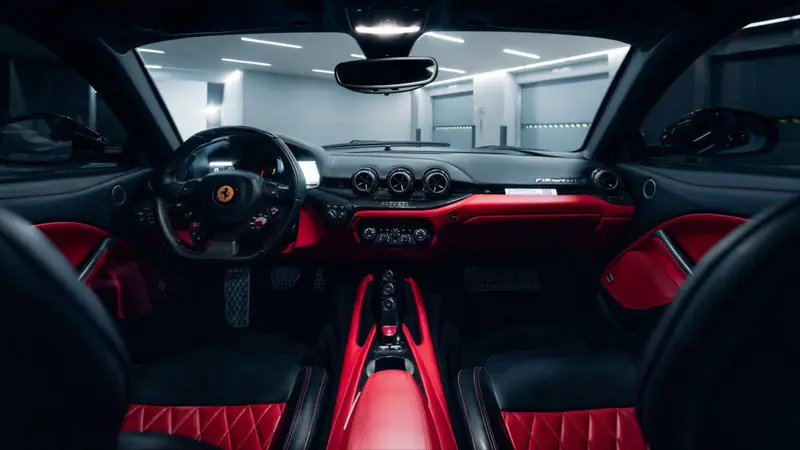
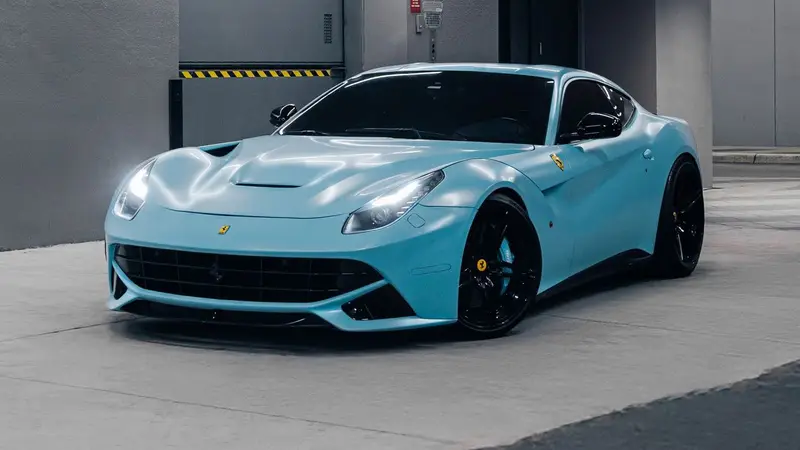
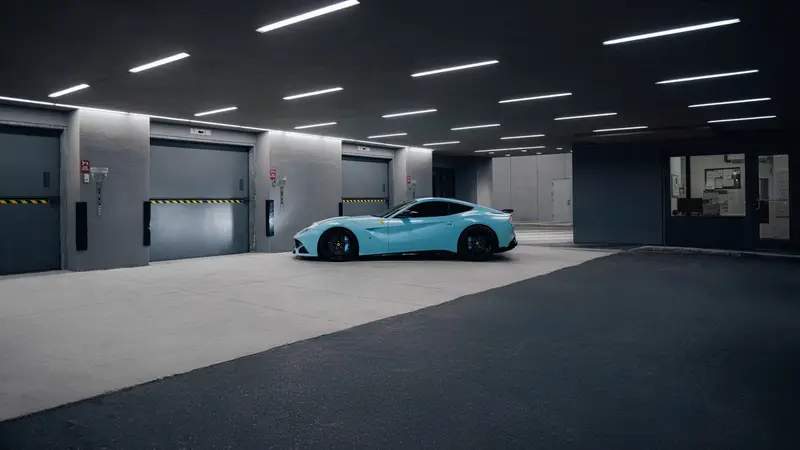
For a car that speaks directly to the heritage covered above, look to the Ferrari F12 Berlinetta. This is a direct descendant of the front-engined V12 grand-touring tradition, the same philosophy that produced generations of long-legged Ferraris built to devour open road. The F12 delivers that deep, layered V12 voice, a shape that manages to be both muscular and elegant, and a driving character that rewards you the moment you press the throttle. It is the kind of car that makes the history feel present, as if you are holding a chapter of the story in your hands and steering it toward the coast.
Real South Florida Routes
Miami was practically designed to show a Ferrari at its best. Start with Ocean Drive and the South Beach scene, where the pastel Art Deco facades and the pedestrian energy make a slow, deliberate cruise feel like a scene from a film. From there, take to the causeways that connect the city to the barrier islands, long ribbons of road over open water where the skyline rises on one side and the bay stretches out on the other. Those bridges are among the most satisfying stretches of driving in the region, and a V12 sounds even better with water on both sides.
For something longer, point the nose north and run A1A up the coast toward Fort Lauderdale, tracing the shoreline with the Atlantic on your right and a string of coastal towns rolling past. It is a route that rewards patience and presence, the kind of drive where the destination matters less than the road itself. This is the heart of the Ferrari rental Miami experience, and for most people it is the closest they will ever come to living the racing lineage in ordinary daily life. You are not on a track, but the sensations, the sound, the response, the sense of occasion, trace all the way back to Enzo's first V12 in 1947.
Experience the Heritage Without the Ownership Burden
There is a balanced case to be made for renting rather than owning, and it is worth stating plainly. Ownership of an exotic brings the drive and the status, but it also brings a substantial acquisition cost, real depreciation, insurance, storage, and the specialized maintenance a car like this demands. Renting gives you the drive, the sound, and the occasion for a weekend, a shoot, or a milestone celebration, without carrying any of the long-term weight. Neither choice is wrong. It simply depends on how often you plan to drive and what you want out of the relationship. For a taste of the lineage on a specific occasion, renting makes a great deal of sense.
The basics are refreshingly straightforward. The minimum age to rent is 18, you will need a valid driver's license and active personal car insurance, and if you do not carry your own insurance you can book the chauffeur option instead and still enjoy the car. Drivers between 18 and 21 may be asked for a higher refundable deposit. That is the extent of it, and none of it should get in the way of the experience.
Keep Reading: More Legends in the Fleet
If this origin arc drew you in, the story does not end here. There are companion pieces on the Blogs page that trace the histories of other icons in the same spirit, built for enthusiasts who enjoy understanding where these machines came from before they get behind the wheel. Think of them as sibling chapters to this one, each with its own founding drama and its own path from ambition to legend. They are worth a read if you love this world the way we do.
FAQ
Who founded Ferrari and when?
Ferrari was founded by Enzo Ferrari. The organization began in 1929 as Scuderia Ferrari, a racing team that initially prepared and raced Alfa Romeos rather than building cars of its own. The first car to wear the Ferrari name, the 125 S, arrived in 1947. That sequence is the core of the Enzo Ferrari story and the foundation of all Ferrari history: a racing team came first, and the marque followed.
Is Ferrari really the most successful team in Formula 1?
Yes, in the meaningful sense. Ferrari is the oldest continuously competing constructor in Formula 1, having taken part since the World Championship's founding in 1950, and it is the most successful team in the sport's history. Exact championship and race-win counts shift over time as seasons pass, so it is best to speak in those general terms, but the broad truth is firmly established. No name in Ferrari Formula 1 history, or in the sport at large, carries a longer or more decorated record.
What was the first Ferrari road car?
The first Ferrari road car was the 1947 125 S, powered by a 1.5-liter V12. It was built in part to fund Enzo's racing program, which is the perfect illustration of the road-cars-from-the-track thesis. Racing was always the ambition, and the road cars were the means of supporting it. That V12 heart, present from the very first car, still defines the marque today.
Can I rent a Ferrari in Miami?
Yes. The modern fleet makes the experience accessible without the burdens of ownership, and a standout choice is the Ferrari F12 Berlinetta, a front-engined V12 that carries the grand-touring tradition into the present. If you do not have your own insurance, chauffeur service is available so you can still enjoy the car. However you approach it, the Ferrari rental Miami experience is closer than you might think.
What do I need to rent an exotic car?
The requirements are simple. You must be at least 18 years old, hold a valid driver's license, and carry active personal car insurance. If you prefer not to drive yourself or do not have your own insurance, you can choose the chauffeur option instead. Drivers between 18 and 21 may be asked for a higher refundable deposit. That is all it takes to put the legacy in motion.
Ready to Drive the Legacy
Ferrari's story is one of speed, craftsmanship, and a founder who cared about winning above all else, and the most rewarding way to appreciate it is to feel it for yourself on the roads Miami was made for. Take a V12 across the causeways at golden hour, run the coast north toward Fort Lauderdale, and let the sound tell you the rest of the story. Explore the full lineup at our website or head straight to the Ferrari page to see what is available.
When you are ready, reach out by phone or WhatsApp at (850) 218-5463, email us at info@rushingrentals.co, or say hello on Instagram at @rushingrentals. The heritage is waiting, and South Florida is the perfect place to experience it.